
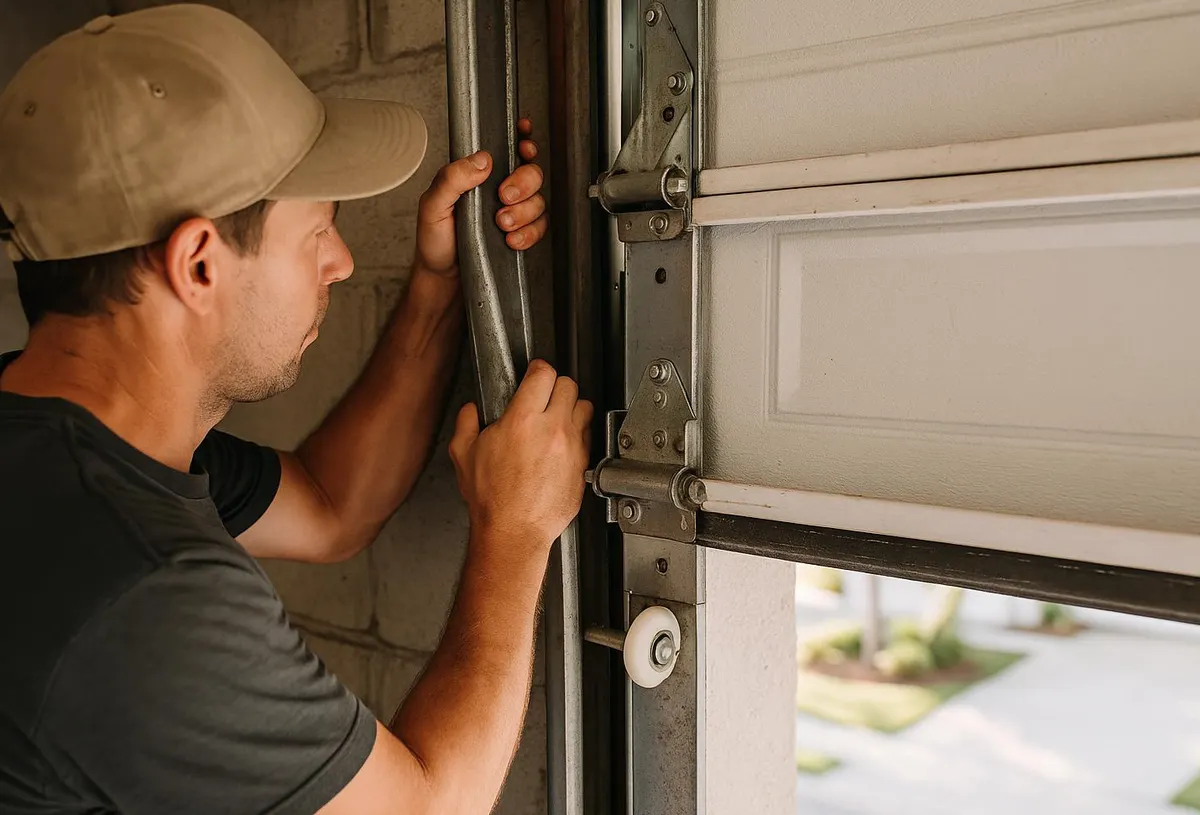
You Notice It on a Humid Morning
You hit the opener button and the door groans, then sticks about a foot off the ground. Or you walk past the garage and see a line of rust bubbling up along the bottom panel seam, right where water pools after the last afternoon downpour. Maybe it's the wood door that used to close flush and now drags against the frame every time the humidity spikes. None of these are random. They're the climate here doing exactly what it does to garage doors that weren't matched to it.
Why the Material Choice Matters More Here
Homes near Tyndall Air Force Base deal with a combination most garage doors weren't designed around: constant humidity, salt-laden air if you're anywhere close to the coast, intense UV exposure, and wind-load requirements tied to hurricane season. A door that performs fine in a dry inland climate can swell, rust, or fail here within a few seasons. That's why the material isn't a cosmetic choice — it's a performance decision.
Steel
- Strengths: Steel doors are the most common choice in storm-prone areas because they can be manufactured with reinforced bracing to meet wind-load ratings. They resist warping and hold their shape under pressure from gusts.
- Weaknesses: Steel rusts if the protective coating is scratched or chipped, and salt air accelerates that process. Seams, hinges, and the bottom panel (where water collects) are the usual failure points.
- Maintenance reality: Needs a rinse-down periodically to clear salt residue, plus prompt touch-up paint on any exposed scratches.
Wood
- Strengths: Unmatched curb appeal and a custom look that steel and aluminum can't fully replicate.
- Weaknesses: Wood absorbs moisture. In this climate, that means swelling, sticking, and warping, especially during the humid stretch from late spring through hurricane season. Panels can also develop soft spots or rot if sealant isn't reapplied regularly.
- Maintenance reality: Requires annual resealing or repainting and isn't the easiest material to keep wind-load compliant without added internal bracing.
Aluminum
- Strengths: Naturally rust-resistant, which makes it appealing for coastal exposure. Lightweight, so it puts less strain on springs and openers.
- Weaknesses: That same light weight makes it prone to denting from storm debris or an errant basketball, and it can flex under strong wind unless properly reinforced. Not always the first choice where high wind-load ratings are a priority.
- Maintenance reality: Low upkeep for corrosion, but dents and panel damage are more frequent than with steel.
Fiberglass
- Strengths: Resists rust and rot completely, holds up well against salt air, and can be molded to mimic the look of wood.
- Weaknesses: UV exposure over time can cause fading, yellowing, or brittleness, and panels can crack on impact in a way steel simply dents instead.
- Maintenance reality: Minimal, though sun-facing doors will show wear faster than shaded ones.
Composite (Wood Composite / Overlay)
- Strengths: Built to resist moisture better than solid wood while keeping a similar appearance. Handles humidity swings without the swelling problems of real wood.
- Weaknesses: Generally costs more than steel in the same style, and quality varies a lot between manufacturers.
- Maintenance reality: Easier than wood, but still benefits from periodic sealing at seams and edges.
Side-by-Side Trade-Offs
If you're weighing these against each other for a Gulf Coast home, here's the short version:
- Best wind-load performance: Steel, when properly reinforced and rated.
- Best natural corrosion resistance: Aluminum and fiberglass.
- Best curb appeal: Wood, with composite close behind and far less maintenance.
- Lowest long-term upkeep in salt air: Fiberglass.
- Most budget-friendly with solid durability (national range): Steel doors typically run in the low-to-mid range for installed doors, while solid wood and higher-end composite options run noticeably higher.
What We'd Recommend for Typical Homes Here
For most homes around Tyndall AFB, Panama City, and the surrounding communities, a wind-rated steel door is the practical choice. It handles storm-season wind-load requirements well, and with a quality factory coating plus occasional rinsing to clear salt residue, it holds up for years. If you're closer to the water and corrosion is your bigger worry than storm impact, fiberglass is worth the upgrade cost. Wood is best reserved for covered or less-exposed entries where you're willing to commit to annual resealing, and composite is a solid middle ground if you want the wood look without the humidity headaches.
When to Call Tyndall Air Force Base Garage Door
If your current door is showing rust bubbling at the seams, sticking from swelling, or sagging on one side, those are signs the material is losing its fight with the climate, not just a lubrication issue. We handle Garage Door Panel Replacement when only sections need swapping out, and full Garage Door Opener Installation and tune-ups when you're ready to upgrade the whole system before hurricane season tightens its grip. We'll check wind-load bracing, inspect for hidden rust or rot, and recommend the material that actually fits your exposure, not just what's cheapest to install.
If your garage door is sticking, rusting, or due for a material upgrade before storm season peaks, call Tyndall Air Force Base Garage Door for a straightforward inspection and fair-price quote serving Tyndall AFB, Panama City, and Bay County, FL.