
The Call That Started This Argument
A technician pulls up to a detached workshop behind a house near Springfield. The homeowner bought the place with a big steel overhead door already installed, clearly left over from when the building was used for small business storage. Now it's sagging, the opener chain is rattling, and the spring just snapped. The homeowner swears it just needs 'the same tune-up as the garage door on the house.' The spouse says that's wrong because it's a different kind of door entirely. Both of them are half right, which is exactly why this argument keeps happening in driveways across Bay County.
What Actually Makes a Door 'Commercial'
The difference isn't really about where the door sits. It's about what's inside the door and how hard it's built to work.
- Panel construction: Commercial and warehouse doors typically use thicker gauge steel, sometimes with heavier insulation cores, to handle repeated impact and higher wind-load demands.
- Springs: Residential doors usually run standard torsion springs rated for a few thousand cycles. Commercial doors often use high-cycle springs built for tens of thousands of openings, because a warehouse door might go up and down dozens of times a day instead of two or three.
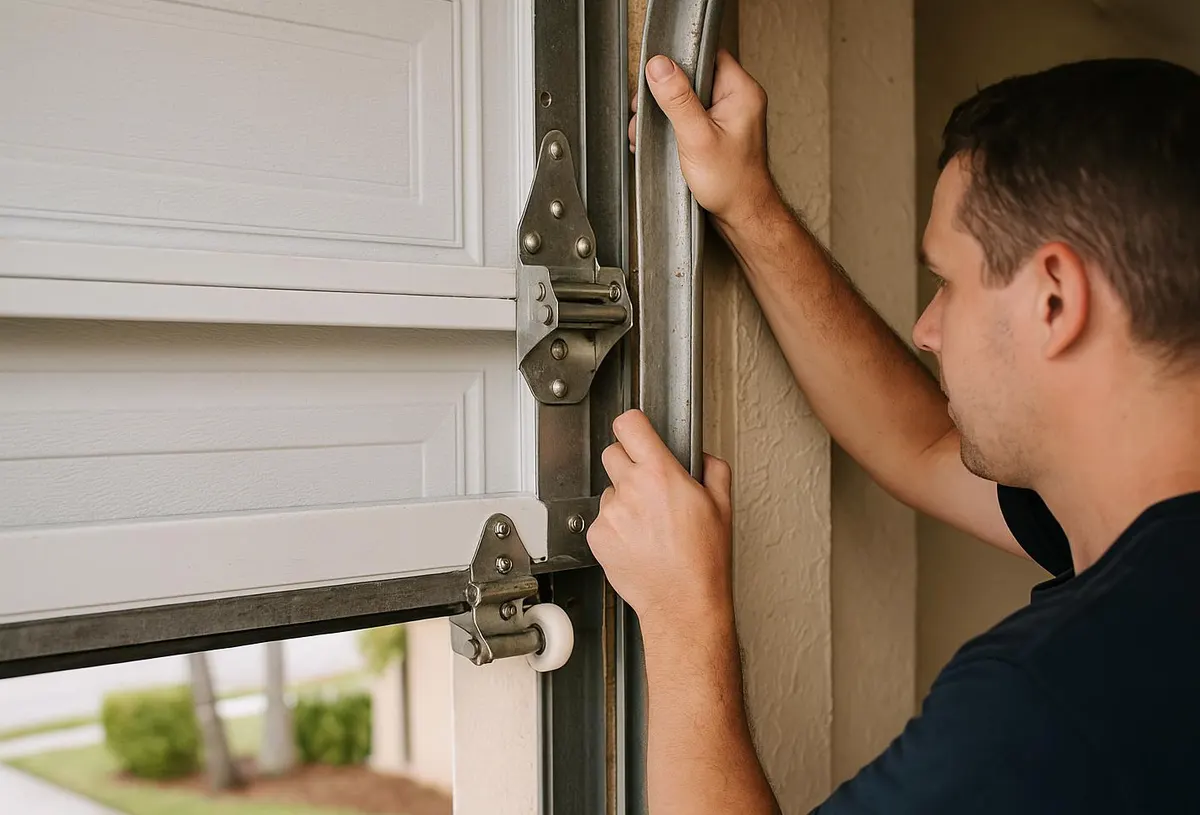
- Track and hardware: Commercial tracks are often heavier gauge, with reinforced brackets to support the extra weight and frequent use.
- Opener duty cycle: A residential opener is built to run occasionally. A commercial-grade opener is rated for continuous or near-continuous duty, with a stronger motor and often a different drive system.
So if that workshop door has thicker panels, heavy-duty springs, and a chain-drive opener clearly meant for frequent cycling, it's a commercial door doing residential work now, and it should still be treated like one.
Why the Maintenance Schedule Is Different
This is where the argument usually gets settled. A door built for high-cycle commercial use isn't necessarily low-maintenance just because it's rated tougher. It's the opposite: more cycles means more wear on rollers, hinges, and springs, so it needs inspection more often, not less. A homeowner with a converted commercial door on a workshop or detached garage should be checking hardware and lubricating moving parts more frequently than they would on the house's standard residential door, especially if that door gets opened multiple times a day.
What This Looks Like in Practice
- Listen for grinding or popping during operation, a sign the rollers or hinges are wearing faster than expected.
- Check spring tension more often if the door cycles frequently.
- Inspect cables and pulleys for fraying, since heavier doors put more load on these parts.
Rust, Salt Air, and Moisture: Same Enemy, Different Door
Whether it's a residential door on a house in Lynn Haven or a commercial-style door on a workshop near Parker or Mexico Beach, the coastal air doesn't care what the door was originally built for. Salt air accelerates rust on exposed hardware, and the heavy humidity common through the warmer months causes wood or composite panels to swell and metal fasteners to corrode faster than they would inland. Hurricane season adds another layer: any overhead door, commercial or residential, needs hardware rated to handle wind-load requirements, and that rating only holds up if the tracks, springs, and panels are in good condition. A rusted bracket or a cracked panel isn't just an eyesore before a storm, it's a weak point.
Who's Actually Right in the Argument
If the door in question has commercial-grade components, it needs commercial-level attention, even sitting on residential property. Treating it like a standard garage door and only checking it once a year is how homeowners end up with a snapped spring or a door that won't close right before a storm rolls in.
When to Call Tyndall Air Force Base Garage Door
If a spring has already failed, if the door is grinding or sticking, or if it's been years since anyone checked the hardware on a heavier-use door, that's the time to call. Tyndall Air Force Base Garage Door handles both Garage Door Spring Repair and Garage Door Tune-Up & Maintenance, and can tell you on-site whether what you're dealing with is a standard residential door or something built for heavier commercial-style use, plus what kind of maintenance schedule it actually needs given how it's being used and the coastal conditions it sits in.
Give us a call if you're not sure what's hanging over your driveway in Tyndall Air Force Base, Panama City, or anywhere else in Bay County. We'll settle the argument and get the door running safely before the next round of storms.