
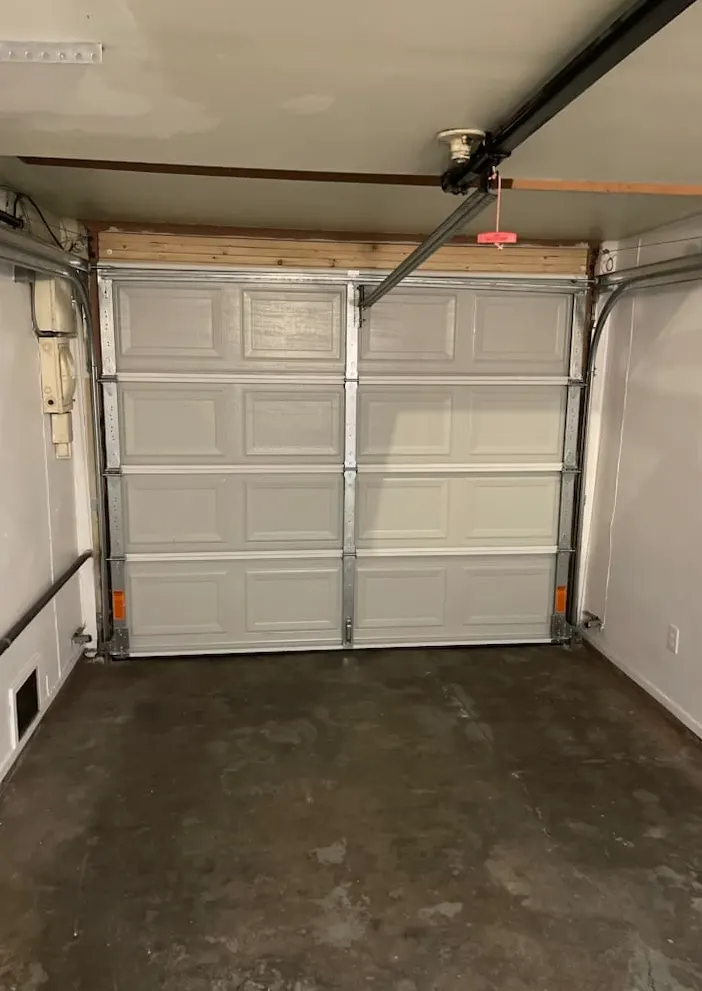
What Another Season of Ignoring It Actually Costs
Put this off through one more humid Gulf Coast summer and a hurricane season, and the bill doesn't stay small. A door that's out of balance because of added insulation strains the opener motor until it burns out. Trapped moisture behind new drywall or flooring starts rust at the bottom panel before you ever see a stain on the floor. And if the door itself got swapped out or weatherstripped without anyone checking the wind-load rating, you've got an exterior wall that isn't built for this area's storm rules anymore. None of that shows up on day one. It shows up in March when the opener won't lift the door, or in September when a tropical system is bearing down and the "gym" door won't seal.
The Argument, Laid Out Plainly
One spouse says: we don't park in there anymore, the door is basically decoration, stop worrying about it. The other says: it's still the biggest moving part on the house and it's still bolted to a track system that has to work. Both of you are partly right. The door's job changed. It didn't disappear.
What Actually Changes When a Garage Becomes a Room
A garage door doing double duty as a wall for a gym, office, or workshop has to handle things a parking-only door never did:
- Added weight. Insulated panels, foam board, or a new liner on the inside of the door add pounds the springs weren't sized for. An old door can go from easy to lift to fighting you — or fighting the opener — almost overnight.
- Sealed-up humidity. Once the garage is conditioned space with AC running, warm coastal humidity meeting a cool door surface creates condensation. That moisture sits in the bottom seal and the track hardware, which is exactly how rust gets started near the salt air zones around Panama City Beach and Mexico Beach.
- New flooring, new clearances. Epoxy coatings, rubber gym flooring, or a workshop subfloor often raise the floor height by a quarter-inch to an inch. That's enough to throw off the bottom seal, catch the sensor beams, or make the door bind on the track.
- Less daily use, more occasional strain. A door that only opens once a week for storage access or hurricane shutters has less wear but also less chance for anyone to notice small problems before they become big ones.
Four Signs the Conversion Changed Your Door's Behavior
- It's noticeably heavier to lift by hand than it was before the renovation — a sign the springs are now undersized for the door's new weight.
- Condensation beads on the inside of the door on humid mornings, especially after a run of afternoon downpours.
- Rust spots are starting at the bottom edge or around the hinges, even though the door is barely used.
- The opener strains, reverses, or stalls partway up — often because the balance point shifted when the garage's interior changed.
Before You Call the Room Finished
A few things are worth doing regardless of which spouse wins the argument:
- Get the door's balance checked. Disconnect the opener and lift the door halfway by hand — it should stay put. If it drops or shoots up, the springs need adjusting for the new weight.
- Replace or inspect weatherstripping along the bottom and sides. This matters more now that the space behind the door is conditioned and finished, not just storage.
- Confirm the door hardware still matches the wind-load rating for this area if anything about the door itself was altered during the conversion — don't assume a swapped panel or added insulation kit kept the original rating intact.
- Keep the opener's safety sensors aligned after any flooring change. A door that reverses unpredictably is a hazard, not a quirk.
- Think about resale. Buyers in Bay County still expect a garage to function as a garage. Keeping the door fully operational — not painted shut or permanently blocked — protects that option even if you never plan to park in there again.
When to Call Tyndall Air Force Base Garage Door
If the door feels heavier since the renovation, is sweating or rusting at the bottom, or the opener is straining, that's not something to leave for next season. We'll run a full Garage Door Tune-Up & Maintenance check — balance, hardware, track alignment, weatherstripping — and if the springs are undersized for the new weight, we handle Garage Door Spring Repair on the spot with the right spring rating for the door you actually have now, not the one that was there before the conversion.
Serving Tyndall Air Force Base, Panama City, Panama City Beach, Lynn Haven, Callaway, Springfield, Parker, and Mexico Beach — call Tyndall Air Force Base Garage Door before hurricane season tests a door nobody's checked since the renovation.